Pre-Degree Hours · California 2026
Pre-Degree BBS Hours for MFT Trainees in California: Rules, Caps, and What Counts
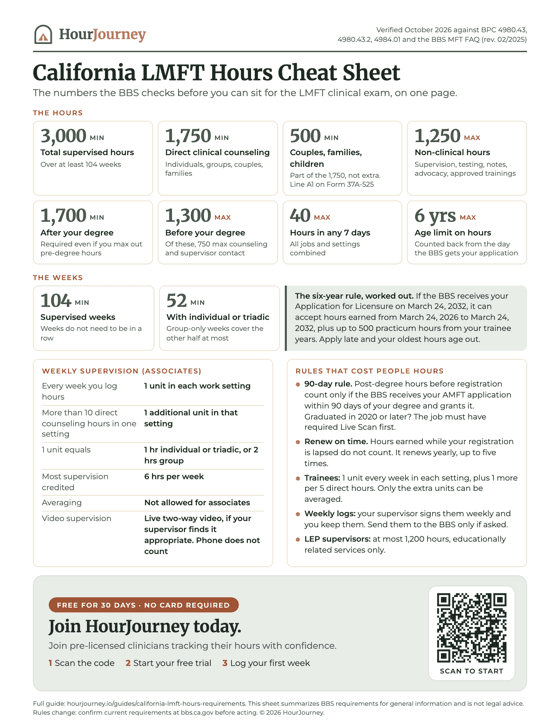
California lets MFT Trainees count pre-degree hours toward licensure, up to 1,300 of them. But the caps, settings restrictions, and form requirements are easy to get wrong. This guide covers every pre-degree rule that matters for your LMFT journey, including the 750-hour counseling sub-cap, the six-year protected practicum exception, and how couples-and-family hours work during the trainee phase. Sourced from the BBS MFT FAQ revised February 2025 and the California Business and Professions Code.
Last Updated: October 2026
Quick Reference
Max pre-degree total
1,300 hrs
Max counseling + supervision
750 hrs
Post-degree minimum
1,700 hrs
Pre-degree for LPCC/LCSW
No
Six-year protected hours
Up to 500
CFC hours from pre-degree
Yes
What Are Pre-Degree Hours?
Pre-degree hours are supervised clinical experience hours earned while you are still enrolled in your qualifying master's degree program. In California, the Board of Behavioral Sciences (BBS) allows MFT Trainees to begin accumulating hours toward LMFT licensure before they graduate — a significant advantage that no other BBS license type offers.
To earn pre-degree hours, you must be working at a site that your school has approved and has a written agreement with. You must have completed at least 12 semester units (or 18 quarter units) in your qualifying MFT program before any hours can count. If you are providing direct counseling to clients, you must also be simultaneously enrolled in a practicum or field study course.
Pre-degree hours are logged on the weekly log (BBS Form 37A-525) and reported on the In-State Experience Verification (Form 37A-301) with the "Pre-Degree" box marked. Use separate 37A-301 forms for pre-degree and post-degree experience, for each supervisor and each setting.
The BBS classifies every hour as either pre-degree or post-degree based on a single date: the date your qualifying degree was officially conferred. Experience gained before that date is pre-degree. Experience gained after it is post-degree. This distinction is critical because the BBS applies different caps and rules to each phase.
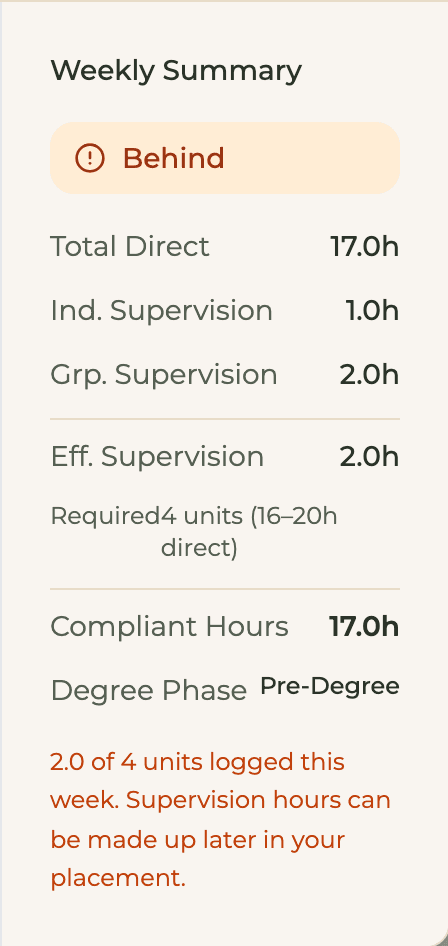
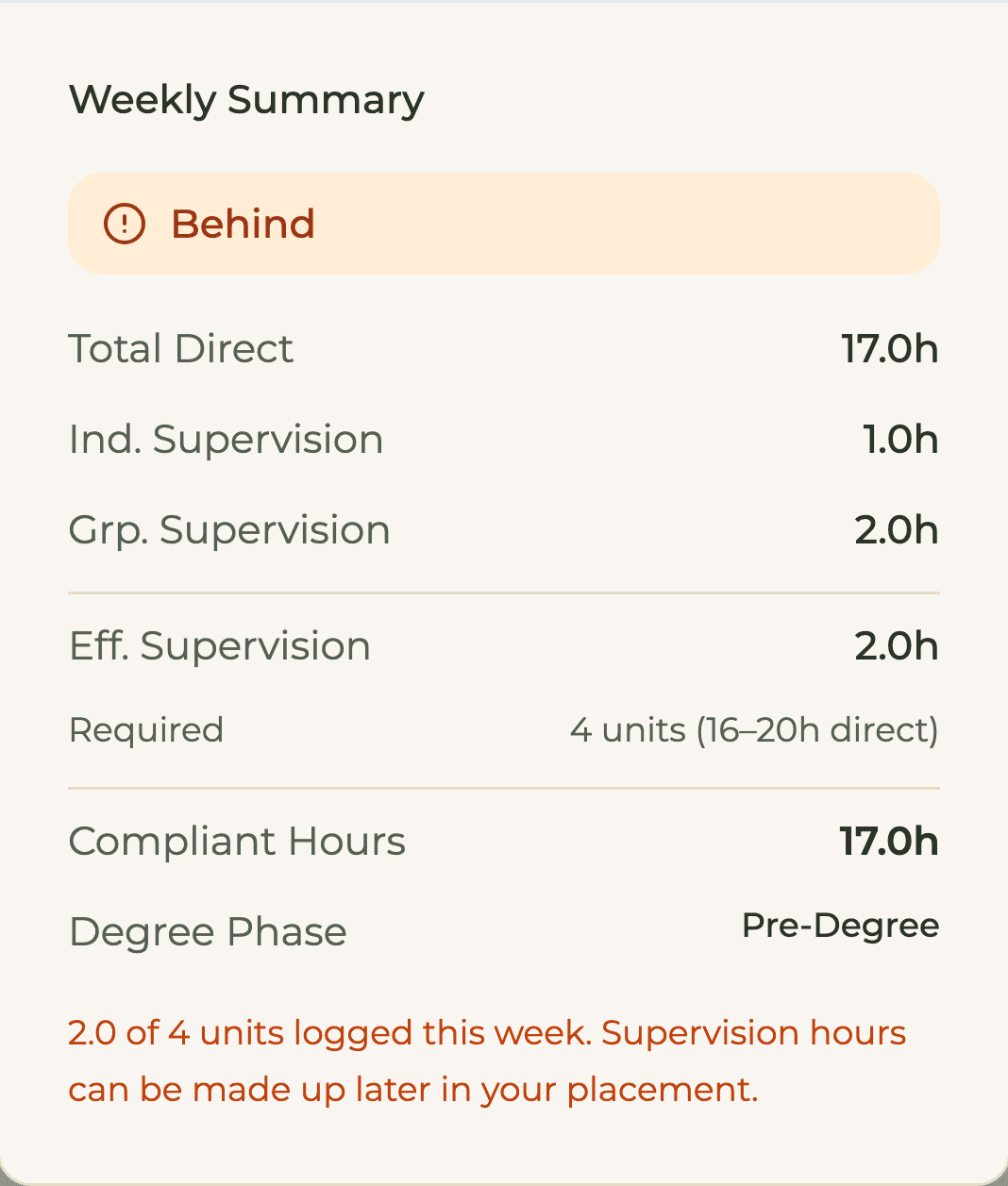
HourJourney sorts every week into pre-degree or post-degree for you
Set your graduation date once. Each week you log is marked Pre-Degree or Post-Degree, and its supervision is checked against the trainee or associate rules.
The 1,300-Hour Total Cap
Under BPC Section 4980.43(c), the BBS allows a maximum of 1,300 total pre-degree hours to count toward the 3,000-hour LMFT requirement. This is a hard ceiling: pre-degree hours beyond 1,300 are not credited toward licensure.
The 1,300-hour cap encompasses all categories of experience: direct counseling, supervision contact, and non-clinical activities combined. Understanding how the sub-caps work within this total is essential to planning your pre-degree experience strategically.
| Category | Cap | Notes |
|---|---|---|
| Total pre-degree hours | 1,300 | Sum of all categories below |
| Counseling + direct supervisor contact | 750 max | Must be enrolled in practicum |
| Non-clinical experience | 550 (remainder) | No practicum required |
Practically, this means you should begin tracking your hours carefully from the first week of your practicum. If you are logging hours in a tracking system, make sure it distinguishes pre-degree from post-degree and shows how much of each cap you have used.
The 750-Hour Counseling Sub-Cap
Within the 1,300-hour pre-degree total, only 750 hours can come from counseling and direct supervision contact. This sub-cap covers counseling and direct supervisor contact: individual and group psychotherapy, diagnosing and treating couples, families, and children, and your supervisor contact hours (both individual and group supervision).
The remaining 550 hours (1,300 minus 750) must come from non-clinical activities only. Non-clinical experience includes administering and evaluating psychological tests, writing clinical reports, writing progress or process notes, client-centered advocacy, and workshops, seminars, training sessions, or conferences.
If you reach 750 counseling hours with only 200 non-clinical hours logged, your remaining pre-degree time can only be used for non-clinical work. Planning a balanced mix from the start ensures you maximize both categories before graduation.
Supervision hours count toward the 750-hour counseling sub-cap, not the 550-hour non-clinical allocation. Trainees need at least 1 unit of supervision in every week they gain experience in a work setting, plus 1 additional unit for every 5 hours of direct clinical counseling in a single week in that setting. Only the additional units may be averaged over the time at that setting. The 1:10 ratio applies after you become an Associate.
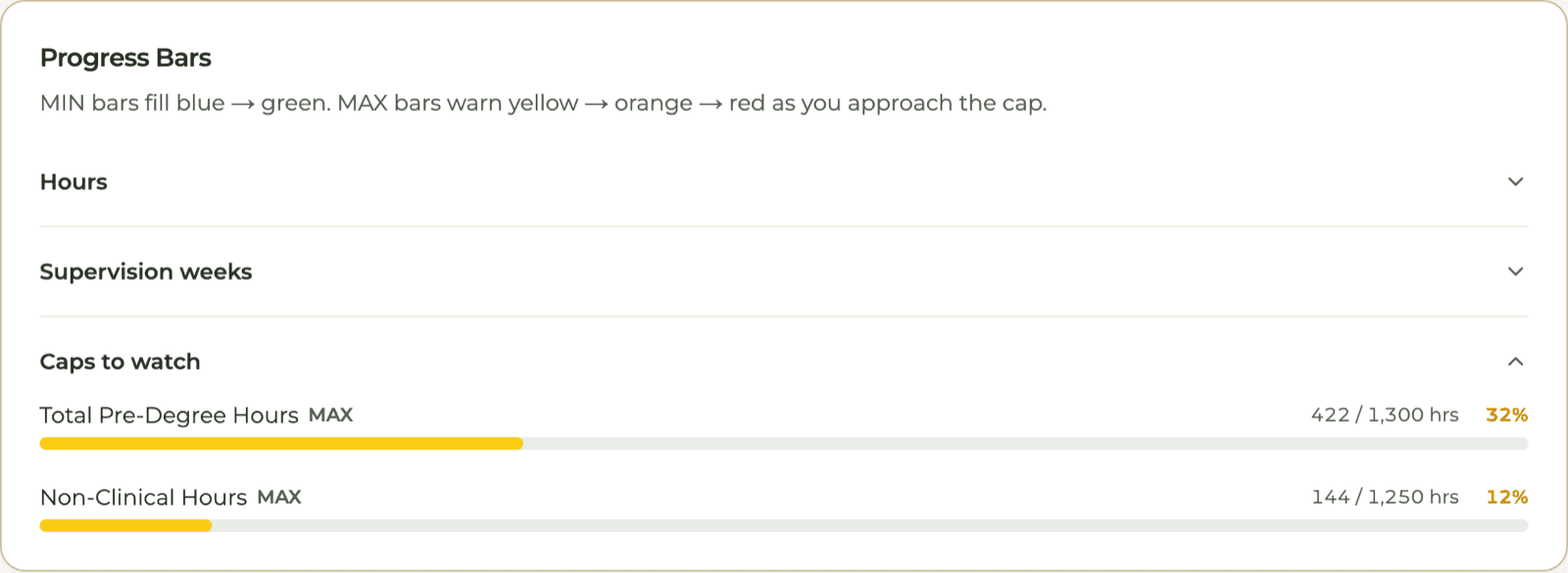
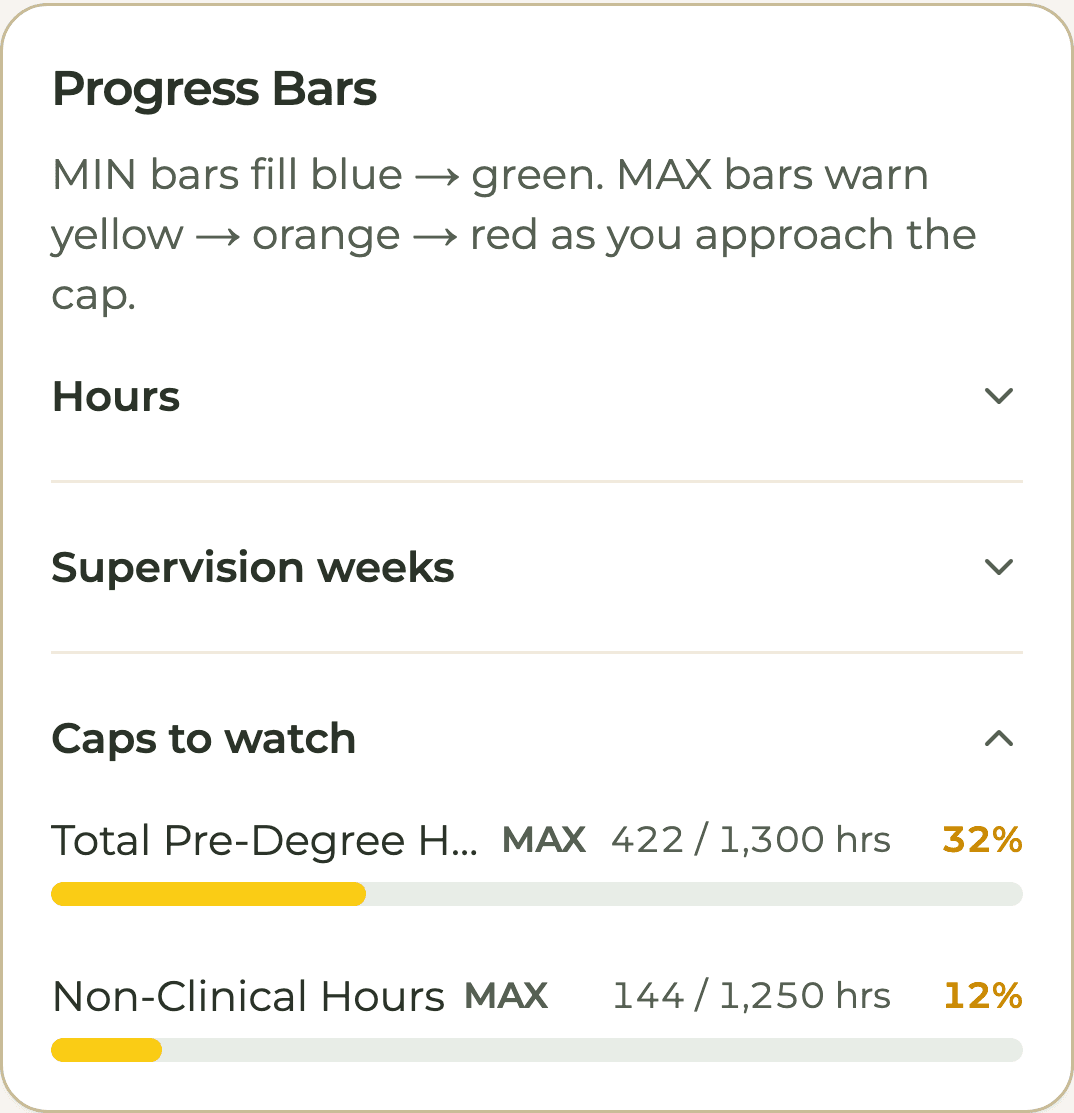
HourJourney tracks your pre-degree hours against the 1,300-hour cap
Your dashboard shows how much of the 1,300 pre-degree hours you've used and counts hours only up to the cap.
The 1,700-Hour Post-Degree Minimum
Even if you earn all 1,300 allowable pre-degree hours, you still need at least 1,700 post-degree hours (hours earned after your degree is awarded) to reach the 3,000-hour total required for LMFT licensure. Pre-degree hours reduce the overall remaining balance, but they do not reduce the post-degree minimum.
This means the math works as follows: 3,000 total required minus 1,300 maximum pre-degree equals 1,700 post-degree minimum. If you earn fewer than 1,300 pre-degree hours — say 800 — you would need 2,200 post-degree hours to reach 3,000. Either way, the 1,700 floor applies.
The post-degree phase begins on the date your degree is conferred. If the BBS receives your AMFT registration application within 90 days of your degree award date and later issues the registration (see the 90-day rule guide), hours earned in between can count toward this post-degree total. If you graduated on or after January 1, 2020, those hours count only if your workplace required completed Live Scan before you gained them and you submit the processed Live Scan form with your licensure application.
What Counts as a Qualifying Pre-Degree Setting?
MFT Trainees face stricter setting requirements than registered associates. To earn countable pre-degree hours, all of the following must be true:
- The setting must be approved by your school
- A written agreement (often called a training agreement or affiliation agreement) must exist between your school and the site
- The setting must lawfully provide mental health counseling services — it must be a legitimate clinical environment
- The setting must provide oversight to ensure your work meets the experience and supervision requirements and is within the scope of practice
- Trainees cannot work in private practice or professional corporation settings under any circumstances
The school-approval requirement means you cannot independently arrange a practicum site without your program's involvement. If you begin logging hours at a site before the written agreement is in place, those hours may not be credited. Always confirm that the agreement is signed and your school has documented the approval before your first day at a new site.
Can Pre-Degree Hours Count Toward the 500-Hour Couples Subset?
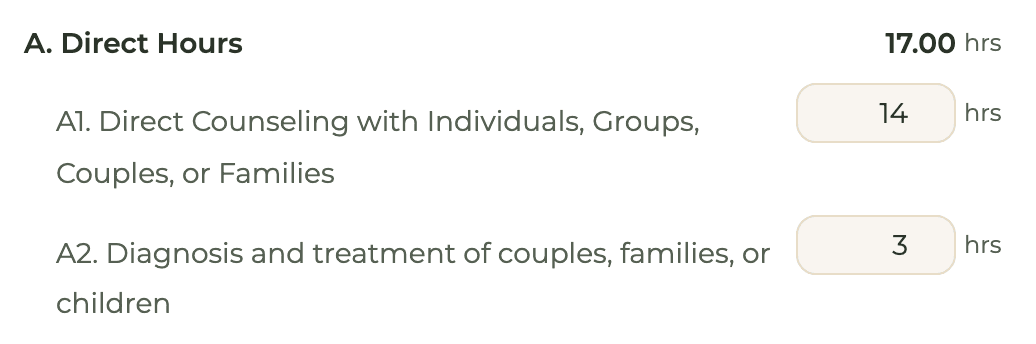
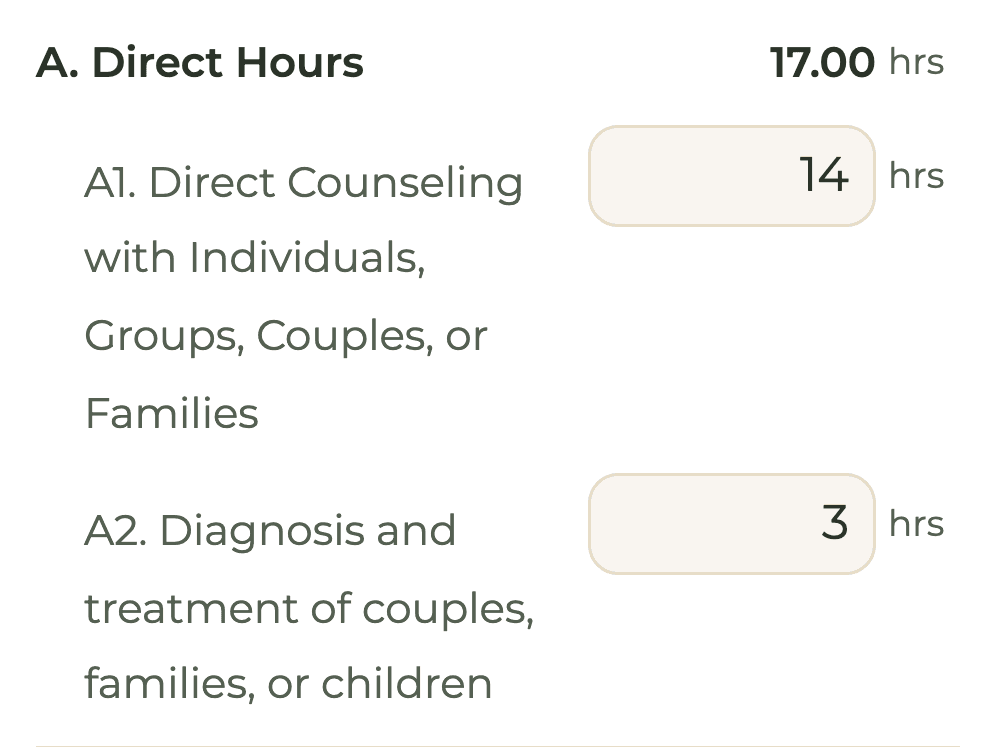
Yes. The BBS requires LMFT applicants to complete at least 500 hours of experience diagnosing and treating couples, families, and children (often called the CFC subset). Pre-degree counseling hours earned while working with these populations count toward this 500-hour requirement.
This is a significant advantage of the pre-degree phase. If your practicum involves family therapy, couples counseling, or child/adolescent therapy, those hours contribute to both your pre-degree counseling total and the 500-hour CFC subset simultaneously. Trainees who work at agencies serving families can make substantial progress on this requirement before they even graduate.
The key is to track CFC hours separately from general counseling hours starting from day one. Form 37A-301 asks how many hours were gained diagnosing and treating couples, families, and children. Use a dedicated tracking system that separates CFC hours automatically to avoid this problem.
HourJourney counts your couples, families and children hours
Log them on their own line each week, and your dashboard keeps a running total toward the 500.
The Protected Practicum Exception to the Six-Year Rule
The BBS six-year rule requires that supervised experience hours be gained within six years before the date the BBS receives your Application for Licensure. However, BPC Section 4980.43 provides an exception: up to 500 hours of counseling and supervision gained as a trainee while enrolled in practicum are exempt from the six-year rule.
This means that even if more than six years pass between when you earned your trainee counseling hours and when you apply for licensure, up to 500 of those practicum hours remain valid.
The 500-hour exemption applies to counseling and supervision hours gained in practicum, not to other hours. Other pre-degree hours are subject to the standard six-year rule. For how the six-year rule interacts with your overall hour timeline, see the full MFT hours requirements for California.
As a practical matter, if you are in the middle of your post-degree hours and concerned about the six-year clock, check which of your pre-degree hours qualify for the practicum exception. Knowing that up to 500 practicum hours are exempt can significantly affect your timeline calculations.
How HourJourney Handles Pre-Degree Hours
HourJourney was built specifically for California MFT licensure tracking, and pre-degree hour management is a core feature. When you set your degree awarded date in your profile, HourJourney automatically classifies every logged week as either pre-degree or post-degree based on that date. If you update your degree date later, all existing entries are reclassified instantly.
The dashboard shows your pre-degree hours against the 1,300-hour total cap and the 750-hour direct-hours cap, and only counts hours up to each cap. You can see how many pre-degree hours remain as you log, so you can avoid logging past a cap. Progress bars show your pre-degree and post-degree totals separately, matching how the BBS evaluates your application.
When you export your BBS forms, HourJourney automatically generates separate Experience Verification forms for pre-degree and post-degree hours — exactly as the BBS requires. You do not need to manually separate them or worry about accidentally mixing phases on the same form.
You can use the LMFT Hours Calculator to model how different pre-degree totals affect your overall timeline, or start your free trial to begin tracking pre-degree hours today.
Source: BBS MFT FAQ revised February 2025, BPC Sections 4980.42, 4980.43, 4999.46, 4996.23. This guide is for informational purposes only and does not constitute legal or professional advice. Always verify current requirements directly with the California Board of Behavioral Sciences.
Frequently asked questions
How many pre-degree hours count toward LMFT licensure in California?
What is the 750-hour sub-cap for MFT trainee hours?
Do I still need 1,700 post-degree hours if I have 1,300 pre-degree hours?
Can pre-degree hours count toward LCSW or LPCC licensure?
Do pre-degree hours expire under the six-year rule?
What settings can MFT trainees earn pre-degree hours in?
Can trainee hours count toward the 500-hour couples and family requirement?
Related guides
How to Become an MFT in California
The full 7-step path to LMFT licensure
AMFT Registration Process
Registration application, Live Scan, and the 90-day rule
LMFT 3,000 Hours Breakdown
Complete hour category guide
How to Track AMFT Hours
Step-by-step tracking guide
The 90-Day Rule
Protect hours after graduation
BBS Form 37A-525 Guide
Weekly Log of Experience Hours walkthrough